
9 Self-Awareness Exercises To Build Emotional Intelligence
You can read every personal development book on the shelf and still feel disconnected from your own thoughts and reactions. That gap between knowledge and actual self-understanding is exactly what self awareness exercises bridge. These aren't abstract concepts, they're practical tools that reveal the patterns driving your decisions, relationships, and emotional responses.
Most people operate on autopilot, reacting to situations without understanding why. Limiting beliefs formed years ago continue to shape behavior in ways that feel invisible. The professionals and high-achievers who walk through our doors at Luxury Perspectives often share a similar realization: success in one area doesn't automatically translate to emotional clarity in others.
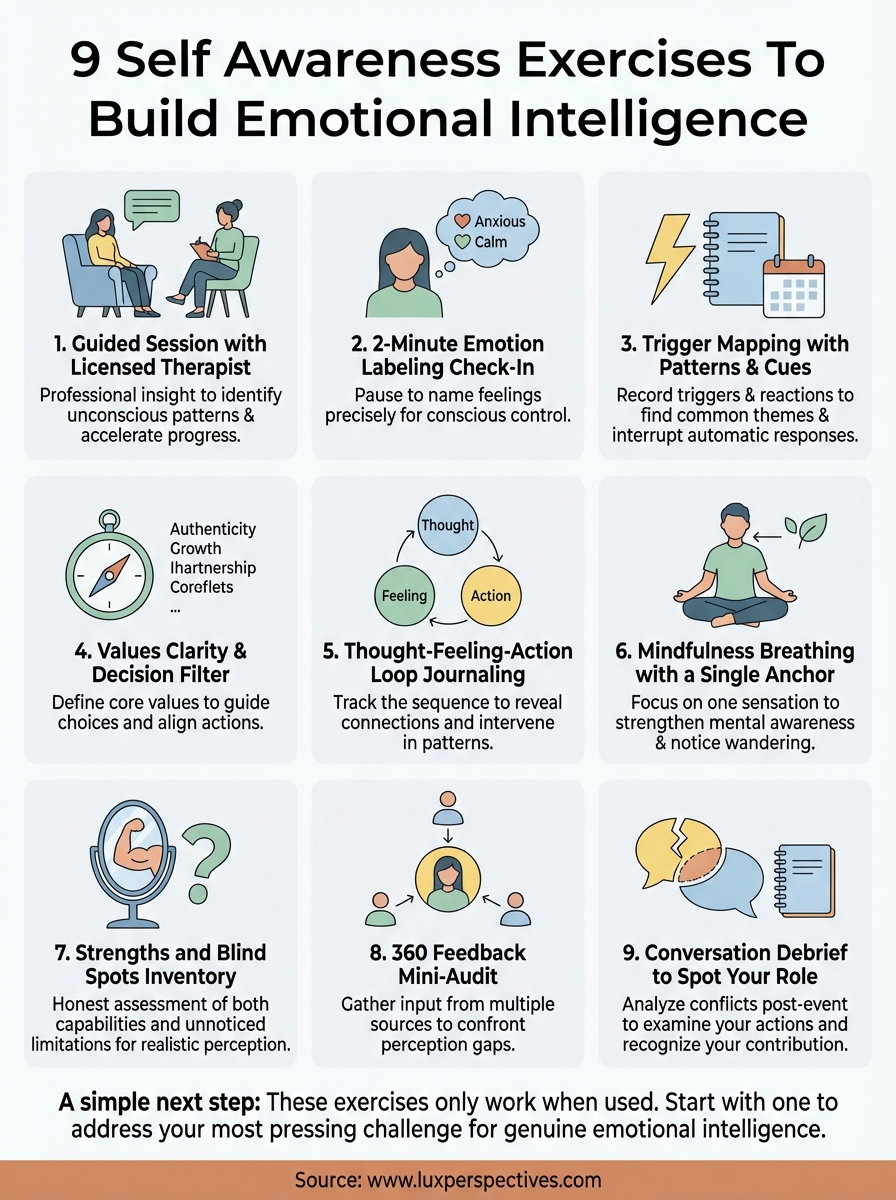
This article breaks down nine exercises designed to build genuine emotional intelligence, whether you're working through personal challenges, strengthening a relationship, or leading a team. Each exercise offers a concrete starting point for the kind of inner work that creates lasting change.
1. Guided self-awareness session with a licensed therapist
Working with a licensed therapist provides the most structured approach to developing self awareness because you gain access to clinical expertise that identifies patterns you can't see on your own. These sessions create a safe environment where trained professionals ask questions that expose the connection between your current behaviors and past experiences. Your therapist helps you recognize defensive reactions, limiting beliefs, and automatic responses that block growth.
What you do
You schedule regular sessions with a Marriage and Family Therapist (LMFT) or similar licensed professional who specializes in self-awareness work. During each meeting, you discuss specific situations from your life while your therapist helps you notice recurring patterns in your thoughts and reactions. The therapist asks targeted questions that reveal blind spots and guides you through exercises designed to increase emotional clarity. Between sessions, you complete assigned practices that reinforce what you've learned.
Why it works for emotional intelligence
Professional guidance accelerates your progress because therapists are trained to spot unconscious patterns that friends and family typically miss. They maintain objectivity that helps you see situations without the distortions created by your own biases. Clinical frameworks and evidence-based techniques provide a structured path through complex emotional territory. This professional relationship creates accountability while offering tools specifically designed to build the emotional intelligence skills you need in relationships and leadership roles.
A therapist's clinical training means they can identify the root causes of emotional patterns that have shaped your behavior for years.
Best for
This exercise serves high-achieving professionals who want efficient, targeted work on relationship challenges or personal growth. You'll benefit most if you value privacy and prefer paying out-of-pocket to avoid insurance databases containing your mental health information. Couples seeking to improve communication patterns or individuals navigating career transitions and childhood trauma find this approach particularly effective.
Time and frequency
Plan for 50-minute sessions once per week during active growth periods, with the option to reduce frequency as you develop stronger self-awareness skills. Most clients see measurable progress within three to six months of consistent work. The investment of time creates space for deep exploration that shorter exercises can't provide.
Make it stick
Take notes immediately after each session while insights remain fresh. Apply one specific technique from your session to real situations before your next meeting. Share your progress and challenges with your therapist so they can adjust the approach based on what's actually working in your daily life.
2. Two-minute emotion labeling check-in
This exercise trains you to pause and name what you're feeling in the moment, transforming vague emotional states into specific, identifiable experiences. Most people move through their day experiencing emotions without consciously identifying them, which creates a disconnect between what they feel and how they respond. Labeling emotions as they occur builds the foundation of emotional intelligence by creating awareness before you react.
What you do
You stop whatever you're doing and spend two minutes identifying your current emotional state. Ask yourself what emotion you're experiencing right now, then name it with precision instead of generic terms like "fine" or "stressed." Distinguish between feeling anxious versus frustrated, or disappointed versus angry. Write down the specific emotion and rate its intensity on a scale of one to ten.
Why it works for emotional intelligence
Naming emotions reduces their intensity and gives you conscious control over your responses. Research shows that the simple act of labeling feelings activates the prefrontal cortex, which helps regulate emotional reactions. This practice strengthens your ability to recognize emotional patterns before they escalate into reactive behavior.
When you can name what you're feeling, you create space between the emotion and your response to it.
Best for
This works particularly well for professionals managing workplace stress and anyone who tends to intellectualize or suppress emotions. You'll benefit if you find yourself reacting to situations without understanding why, or if others tell you that you seem disconnected from your feelings.
Time and frequency
Complete this check-in three to four times daily at consistent intervals, such as mid-morning, lunch, mid-afternoon, and evening. Each practice takes only two minutes, making it one of the most accessible self awareness exercises for busy schedules.
Make it stick
Set phone reminders at the same times each day. Keep a small notebook or phone note dedicated to tracking your emotions and their intensity levels. Review your entries weekly to spot patterns in when and why certain emotions appear.
3. Trigger mapping with patterns and cues
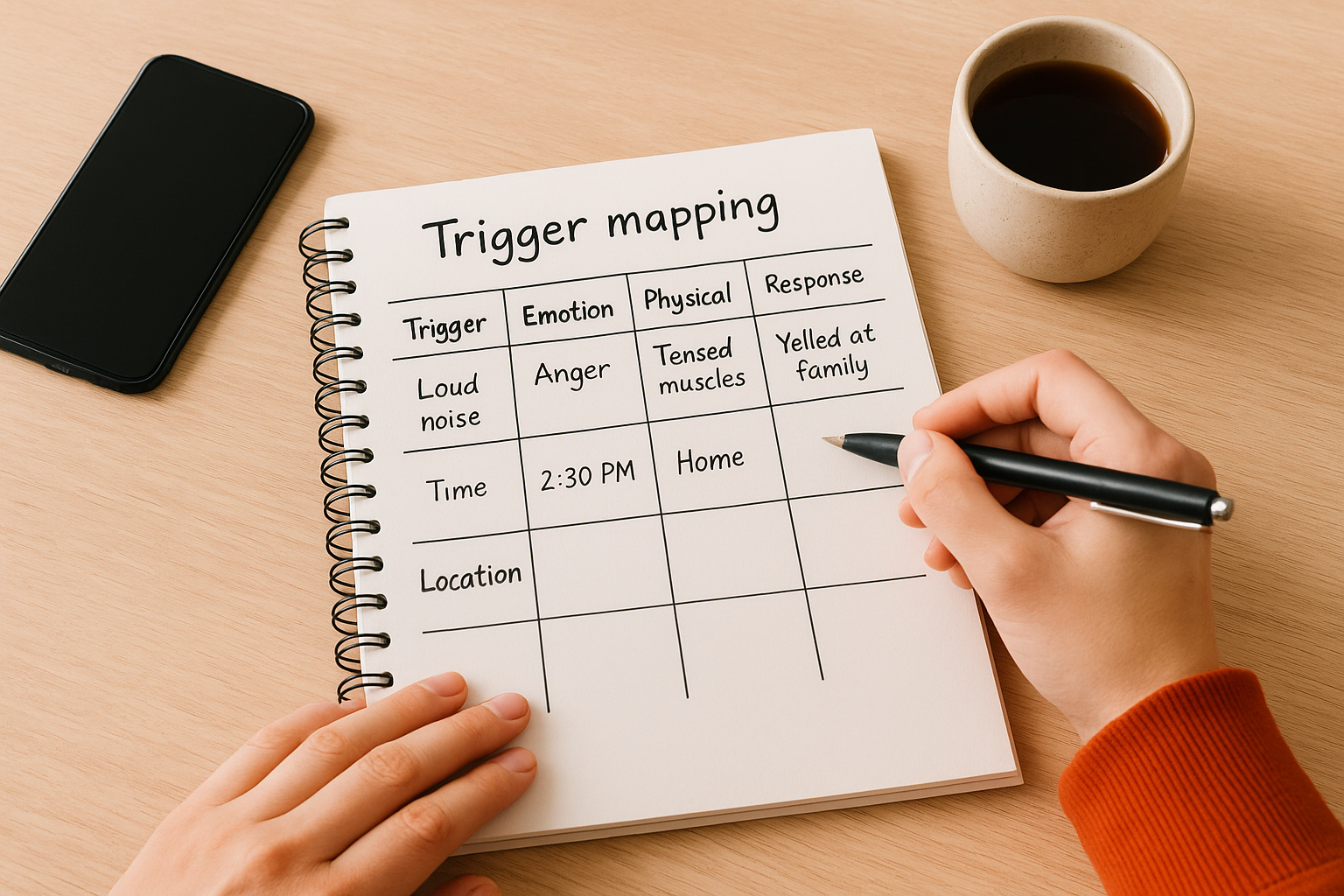
This exercise teaches you to identify specific situations that provoke strong emotional reactions before those reactions control your behavior. Most people recognize they feel triggered but can't pinpoint exactly what sets them off or why. Trigger mapping creates a visual record of your emotional hot buttons, revealing patterns that connect present reactions to past experiences.
What you do
You create a simple tracking document where you record situations that triggered an emotional response. Write down the specific trigger (what happened), your immediate emotional reaction, any physical sensations you noticed, and your behavioral response. Note the time, location, and people involved. After collecting several entries, review them to identify common themes like criticism, feeling ignored, or loss of control.
Why it works for emotional intelligence
This practice reveals the underlying patterns driving your automatic responses, which gives you the power to interrupt them before they escalate. You stop reacting based on unconscious programming and start choosing conscious responses instead. Understanding your triggers helps you communicate your needs clearly rather than acting out unexplored emotions.
When you map your triggers, you transform unconscious reactions into opportunities for intentional growth.
Best for
This benefits anyone who finds themselves overreacting to seemingly minor situations or repeating the same conflicts in different relationships. You'll gain clarity if you struggle with anger management or feel controlled by emotions you don't fully understand.
Time and frequency
Track triggers daily for two to four weeks to gather enough data for pattern recognition. Review your entries weekly to spot connections you might miss in isolated incidents.
Make it stick
Keep your tracking tool easily accessible on your phone or in a dedicated notebook. Schedule a weekly 15-minute review session to analyze patterns and test new responses when similar triggers appear.
4. Values clarity and decision filter
This exercise helps you identify your core values and use them as a practical decision-making tool in daily situations. Most people make choices based on external pressures or fleeting emotions rather than what genuinely matters to them. Clarifying your values creates a reliable internal compass that guides decisions aligned with who you actually are, not who you think you should be.
What you do
You write down your top five core values by considering what matters most when all external validation disappears. Common values include authenticity, growth, family, creativity, or service. For each value, you define what it means specifically to you, not the dictionary definition. Then you create a simple decision filter by asking "Does this choice honor my top three values?" whenever you face a significant decision.
Why it works for emotional intelligence
This practice builds emotional intelligence by revealing the gap between your stated values and your actual behavior. You notice when you feel internal conflict because your actions contradict your values. Understanding this misalignment helps you make intentional choices that reduce internal stress and increase authentic self-expression.
When your decisions align with your core values, you eliminate the confusion that comes from living according to someone else's priorities.
Best for
This benefits professionals facing career crossroads and anyone who feels pulled in multiple directions without a clear sense of priority. You'll find clarity if you struggle with people-pleasing or frequently agree to commitments you later resent.
Time and frequency
Spend 30 minutes initially identifying and defining your values. Apply the decision filter to every significant choice for the next month, then review quarterly to ensure your values still reflect who you're becoming.
Make it stick
Keep your values list visible on your phone or desk. Before saying yes to any major commitment, pause to run it through your values filter first.
5. Thought-feeling-action loop journaling
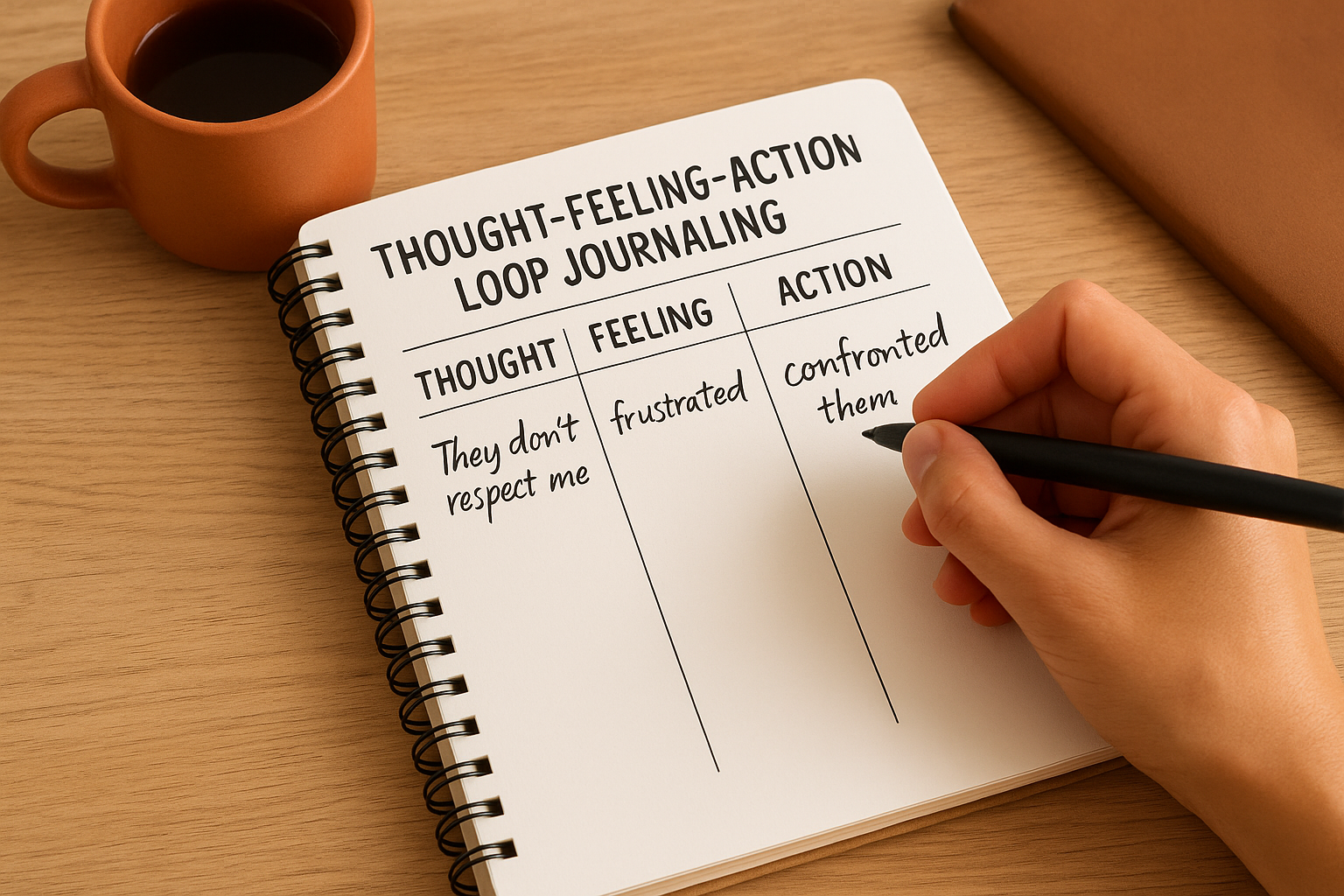
This exercise exposes the direct connection between your thoughts, emotions, and behaviors by tracking them in sequence during specific situations. Most people notice they acted in a certain way but miss the internal chain reaction that led to that behavior. Loop journaling makes this invisible process visible, helping you interrupt unhelpful patterns before they play out.
What you do
You select a specific situation that triggered a strong reaction and write down the sequence in three columns: what you thought, what you felt, and what you did. Start with the triggering event, then capture the exact thought that appeared first (like "they don't respect me" or "I'm failing again"). Next, name the emotion that thought created, then describe the action you took as a result.
Why it works for emotional intelligence
This practice reveals how your interpretation of events creates your emotional experience, not the events themselves. You discover that changing your initial thought changes everything that follows. Understanding this sequence gives you intervention points where you can choose different responses instead of following automatic patterns.
When you see the thought-feeling-action loop on paper, you gain the power to interrupt it in real time.
Best for
This works well for anyone repeating the same behavioral patterns in relationships or workplace conflicts. You'll benefit if you struggle to understand why you react intensely to certain situations.
Time and frequency
Journal immediately after emotionally charged situations for two weeks, aiming for three to five entries per week. Each entry takes five to ten minutes.
Make it stick
Create a simple three-column template in a notebook or phone app. Review your entries weekly to identify recurring thought patterns that drive your reactions.
6. Mindfulness breathing with a single anchor
This exercise trains your nervous system to settle by focusing attention on one specific physical sensation tied to your breath. Unlike general relaxation techniques, using a single anchor point creates measurable awareness of when your mind wanders, which is the core skill that builds emotional intelligence. You learn to notice distraction in real time and bring yourself back, the same mental muscle you need to catch reactive thoughts before they trigger unhelpful behaviors.
What you do
You find a quiet spot and focus exclusively on one physical sensation related to breathing, such as the air moving through your nostrils, your chest rising and falling, or your belly expanding. Set a timer for five minutes and commit to noticing only that one anchor point. When your mind wanders to thoughts, sounds, or sensations, you simply notice the distraction without judgment and return focus to your chosen anchor.
Why it works for emotional intelligence
This practice strengthens your ability to catch automatic thoughts as they appear, which is essential for managing emotional reactions. The repetitive act of noticing distraction and returning to your anchor builds the mental awareness muscle you need to interrupt reactive patterns during stressful situations.
When you can notice your mind wandering during breathing practice, you develop the same awareness that helps you catch unhelpful thoughts before they create emotional reactions.
Best for
This benefits anyone who reacts quickly in conflicts or struggles to pause before responding. You'll gain skills if you find it difficult to calm yourself during stressful moments.
Time and frequency
Practice five minutes daily for at least two weeks to build the skill before trying to use it during actual stress.
Make it stick
Choose the same time and location each day to establish a routine. Start with five minutes and gradually increase to ten as the practice becomes easier.
7. Strengths and blind spots inventory
This exercise creates a balanced assessment of what you do well and what you consistently miss about yourself or others. Most people either inflate their strengths while ignoring weaknesses or focus exclusively on flaws without acknowledging capabilities. Honest inventory work reveals the complete picture, which is essential for making informed decisions about where to invest your growth energy.
What you do
You create two lists by asking yourself what three to five things you consistently do well in relationships, work, or personal challenges. Then you identify three to five patterns that repeatedly cause problems but that you struggle to see without outside feedback. For blind spots, consider feedback you've received multiple times from different people or situations where you felt surprised by negative outcomes.
Why it works for emotional intelligence
This practice builds emotional intelligence by forcing you to hold both strengths and limitations in your awareness simultaneously. You develop realistic self-perception instead of the distorted view that comes from focusing only on what you're good at or only on what needs improvement. Understanding your actual capabilities and genuine blind spots helps you make better choices about when to push forward with confidence and when to seek support.
When you can name both your strengths and your blind spots, you gain the clarity needed to grow without self-deception.
Best for
This benefits professionals who struggle with imposter syndrome or those who repeatedly face similar conflicts without understanding their role in creating them.
Time and frequency
Complete this inventory monthly for three months, then quarterly as you develop more accurate self-perception. Each session takes 15 to 20 minutes.
Make it stick
Share your inventory with a trusted person who knows you well and ask for their honest input on whether your assessment matches their observations.
8. 360 feedback mini-audit for self-awareness
This exercise gathers honest input from multiple people in different areas of your life to reveal how others experience you compared to how you see yourself. The gap between self-perception and external perception often explains why you face recurring challenges in relationships or professional settings. 360 feedback creates a reality check that bypasses your internal biases and shows you exactly what blind spots need attention.
What you do
You select three to five people from different contexts in your life, such as a colleague, a friend, a family member, and your partner or someone you're dating. Ask each person to answer three specific questions about you: what they see as your greatest strength, what pattern they've noticed that might hold you back, and how you typically handle stress or conflict. Frame the request as genuine curiosity about improving yourself, not as fishing for compliments.
Why it works for emotional intelligence
This practice builds emotional intelligence by forcing you to confront the difference between your intentions and your actual impact on others. You discover behaviors you think are helpful but that others experience differently. Collecting feedback from multiple sources reveals consistent patterns you can't dismiss as one person's opinion.
When three different people notice the same pattern in your behavior, you're looking at a blind spot that deserves your attention.
Best for
This benefits professionals who want to improve their leadership presence and anyone who feels misunderstood in relationships despite trying to communicate clearly.
Time and frequency
Complete this audit twice per year to track changes in how others perceive you. Each collection process takes about two weeks.
Make it stick
Write down the specific feedback you receive without defending or explaining yourself. Choose one pattern to address based on what you heard most consistently.
9. Conversation debrief to spot your role in conflict
This exercise reveals your contribution to conflicts by analyzing specific conversations immediately after they happen. Most people focus on what the other person did wrong without examining their own behavior, which keeps them stuck in the same relational patterns. Debriefing conversations systematically exposes the moments where you escalated tension, shut down communication, or misread the situation entirely.
What you do
You set aside 10 minutes after a difficult conversation to write down what happened in sequence. Record what you said, what the other person said, and what you felt at each exchange. Identify the specific moment when the conversation shifted from productive to defensive. Note your exact words, your tone, and any physical reactions like tension or heat in your body.
Why it works for emotional intelligence
This practice builds emotional intelligence by forcing you to examine your actions honestly instead of staying focused on the other person's faults. You discover patterns like interrupting, deflecting, or withdrawing that you typically justify in the moment. Recognizing your predictable responses to conflict gives you specific behaviors to change.
When you can see your exact role in how a conversation deteriorated, you gain the power to change that pattern next time.
Best for
This benefits anyone who repeatedly faces similar conflicts with different people or struggles to understand why conversations escalate despite good intentions.
Time and frequency
Complete a debrief immediately after challenging conversations for two weeks, aiming for at least five debriefs to establish clear patterns.
Make it stick
Review your debriefs weekly to identify your most common conflict triggers and practice one alternative response before your next difficult conversation.
A simple next step
These self awareness exercises work only when you move from reading about them to actually using them in your life. You've seen nine practical approaches that range from two-minute daily practices to structured therapeutic work. The question now is which one you'll try first, because insight without action creates the illusion of progress while nothing actually changes.
Start with one exercise that addresses your most pressing challenge right now. If you struggle with reactive emotions, begin with the two-minute emotion labeling check-in. If you notice recurring relationship patterns, the conversation debrief reveals what you can't see on your own. Most people need professional guidance to work through the patterns that have shaped their behavior for years. Schedule a consultation at Luxury Perspectives to identify which self awareness exercises will create the fastest shift in your specific situation and get expert support as you build the emotional intelligence that changes everything.