
Couples Therapy Near You: How To Choose The Right Therapist
Searching for couples therapy near you brings up dozens of options, directories, clinics, private practices, and suddenly, picking one feels overwhelming. You know your relationship needs professional support, but how do you actually choose a therapist who fits your situation, respects your privacy, and can genuinely help you move forward? Not all therapists work the same way, and the wrong match can leave you more frustrated than when you started.
The truth is, finding the right couples therapist requires more than sorting by distance or reading a few online reviews. You need someone with the clinical expertise to address what's really happening beneath the surface, the patterns, the communication breakdowns, the unspoken tensions that keep cycling back. At Luxury Perspectives, Rhonda Baker works with couples who want more than surface-level advice; they want results built on self-awareness and emotional intelligence.
This guide walks you through exactly how to evaluate your options, what questions to ask potential therapists, and how to recognize the signs of a good fit. Whether you're navigating conflict, considering separation, or simply want to strengthen your connection, you'll leave here knowing how to choose wisely.
What couples therapy can and cannot do
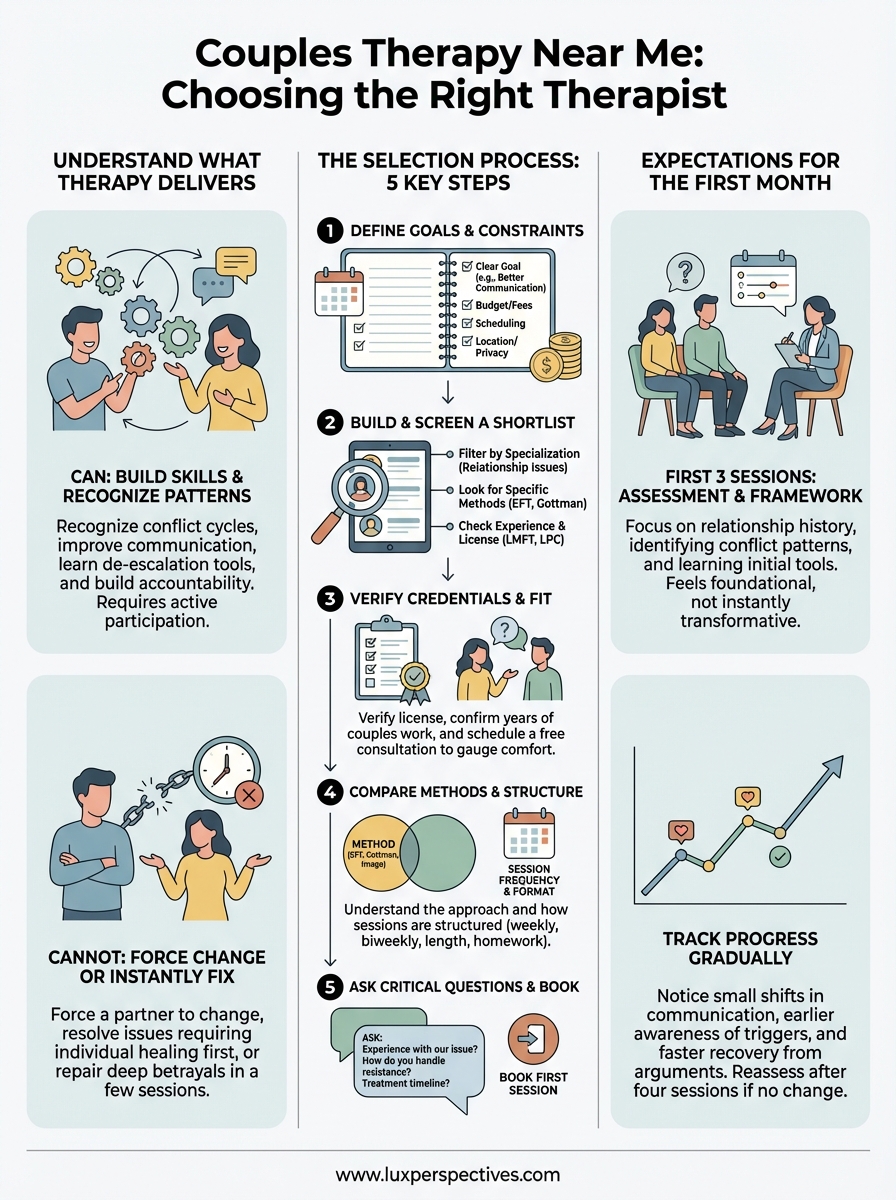
You need to understand what therapy actually delivers before you start searching couples therapy near you and booking sessions. Many couples enter therapy with unrealistic expectations that one partner will be proven "right," that the therapist will solve their problems for them, or that three sessions will reverse years of built-up resentment. The reality is more nuanced. Couples therapy provides a structured space to identify patterns, improve communication, and learn tools you can apply on your own, but it requires active participation from both partners and honest self-reflection outside the therapy room.

What therapy can realistically accomplish
Therapy helps you recognize the cycles that keep you stuck. A skilled therapist guides you through the hidden dynamics beneath your arguments, the defensive reactions, the unspoken resentments, the ways childhood experiences shape how you connect (or disconnect) today. You'll learn to identify triggers before they escalate, express needs without blame, and listen without becoming defensive. These are learnable skills, not personality traits, which means you can shift how you interact even if your partner's behavior doesn't change immediately.
Couples therapy also creates accountability and structure. When you commit to weekly or biweekly sessions, you're forced to prioritize your relationship instead of letting conflict simmer indefinitely. The therapist holds space for difficult conversations that might explode at home, ensuring both voices get heard. You'll practice new communication techniques in real time and receive feedback on what's working or falling flat. Over time, these small adjustments compound into noticeable improvements in how you resolve disagreements and support each other through stress.
"Therapy won't fix your partner, but it will show you how you're both contributing to the pattern and what you can each do differently."
What therapy cannot fix
Therapy cannot force either partner to change if they refuse to engage honestly or do the work outside sessions. If one person attends under pressure, spends every session deflecting, or refuses to apply what they learn at home, progress stalls. The therapist can only guide you; they can't make your partner suddenly become emotionally available, take accountability, or prioritize the relationship. Both people have to want the outcome more than they want to be right, and not all couples are ready for that level of vulnerability.
Couples therapy also won't resolve issues that require individual healing first. If one partner struggles with untreated mental health conditions, active addiction, or unresolved trauma, couples work may need to pause while that person addresses their own needs separately. A skilled therapist will recognize when individual therapy should come first and refer accordingly. Similarly, therapy can't manufacture compatibility where fundamental values, life goals, or attachment styles clash so deeply that no amount of communication skills will bridge the gap. Some relationships end because they weren't built to last, and a good therapist will help you recognize that too rather than pushing couples to stay together at any cost.
Finally, therapy doesn't erase the past or undo betrayals instantly. Rebuilding trust takes time, consistent behavior changes, and sometimes months of uncomfortable conversations. If you're expecting three sessions to repair an affair or years of emotional neglect, you'll leave disappointed. The work is slower, messier, and more demanding than most people anticipate, which is exactly why choosing the right therapist matters so much.
Step 1. Get clear on your goal and constraints
Before you start typing couples therapy near you into a search engine, you need to define what you're actually trying to fix and what limitations shape your options. Most couples skip this step and end up with a therapist who doesn't match their needs, burns through sessions without progress, and leaves them questioning whether therapy works at all. Clarity up front saves you time and money, and it helps you ask better screening questions later. You don't need perfect answers, but you do need honest ones about where your relationship stands and what resources you have available.
Define what success looks like for you
Write down the specific outcome you want from therapy. "Better communication" is too vague; instead, ask yourself what you're fighting about most, what behavior patterns keep repeating, and what would need to change for you to feel hopeful again. Are you trying to decide whether to stay together or leave? Do you need tools to stop explosive arguments? Is one partner withdrawing emotionally while the other pursues constantly? The more specific you get, the easier it becomes to evaluate whether a therapist has experience with your exact situation.
Consider whether you're both equally committed to this process. If one partner is only showing up to appease the other, that shapes what kind of therapist you need, someone who can address resistance directly rather than pretending both people are equally invested. Your goals might also differ from your partner's, and that's information worth acknowledging now instead of discovering it three sessions in.
"You can't pick the right therapist until you're honest about what you're really asking them to help you navigate."
Map your practical constraints
List your non-negotiable limitations: budget, scheduling availability, location preferences, and privacy requirements. If you're paying out of pocket, decide your maximum per-session rate and how many sessions you can afford before needing to see measurable progress. If you require evening or weekend appointments due to work schedules, that narrows your options immediately. Some couples prioritize in-person sessions in their immediate area, while others value specific expertise enough to accept virtual sessions with a therapist located elsewhere.
Privacy concerns matter more than most people admit. If you work in a public-facing role or live in a small community, you might prefer a therapist outside your immediate network or one who operates on a private-pay model to avoid insurance documentation. Write down these constraints so you can filter your search efficiently instead of wasting time researching therapists you can't actually work with.
Step 2. Build a short list fast
You don't need to research every therapist in your area to find good options. Speed matters here because decision fatigue kills momentum, and the longer you spend comparing profiles, the less likely you are to actually book a session. Your goal is to create a shortlist of three to five therapists who meet your basic criteria, then move quickly to the next step. Most people waste hours reading therapist bios that all sound identical; instead, you'll use targeted search methods and quick screening criteria to cut through the noise in under 30 minutes.
Use specific search terms and filters
Start with Psychology Today's therapist directory or similar professional databases that let you filter by location, specialization, insurance, and session format. Type couples therapy near you into the search, then immediately apply filters that match your constraints from Step 1: your budget range, preferred session times, whether you need in-person or virtual, and any non-negotiables like language preferences or cultural background. Most directories show therapists who specialize in relationship issues, but you want someone who lists couples counseling or marriage therapy as a primary focus, not just a secondary service they occasionally offer.
Look specifically for therapists who list relationship dynamics, communication patterns, or attachment styles in their approach rather than generic terms like "supportive environment" or "collaborative process." These details signal they work with relationship systems, not just individuals who happen to be in relationships. Filter for licensed professionals (LMFT, LPC, PsyD, PhD) rather than coaches or unlicensed practitioners, since you're dealing with clinical patterns that require formal training.
"The right filters eliminate 80% of your options in two minutes, leaving you with therapists who can actually serve your needs."
Screen profiles in under 60 seconds
Open each therapist's profile and scan for three quick indicators: listed specializations, years of experience with couples, and their stated therapeutic approach. If they mention emotionally focused therapy (EFT), Gottman method, or attachment-based work, they likely have structured frameworks instead of vague talk therapy. Check whether they explicitly state they work with the specific issues you identified in Step 1, whether that's affairs, divorce discernment, high-conflict communication, or emotional disconnection.
Ignore testimonials and long personal stories in bios; they're marketing fluff. Instead, note their fee structure, cancellation policy, and whether they offer a free consultation call. Add anyone who checks your basic boxes to a simple spreadsheet with their name, contact info, session rate, and one-line note about why they made the cut. Once you hit three to five names, stop searching and move forward.
Step 3. Verify credentials and fit
You've narrowed your list to a handful of therapists, but now you need to confirm they're actually qualified and compatible before you commit to paying session rates. Credentials matter because licensing requirements vary by state, and not everyone who calls themselves a relationship counselor has formal training in systems therapy or clinical marriage work. Fit matters because you'll be discussing intimate details with this person for months, and if something feels off during your first interaction, that discomfort rarely disappears. This step takes 15 minutes per therapist and prevents costly mistakes.
Check licensing and specialization
Look up each therapist's license number through your state's professional licensing board website. Every state maintains a searchable database where you can verify active licenses, check for disciplinary actions, and confirm their credentials are current. For couples therapy, prioritize Licensed Marriage and Family Therapists (LMFT) since their entire training focuses on relationship systems, but Licensed Professional Counselors (LPC) and psychologists (PsyD, PhD) with couples specialization also work well.
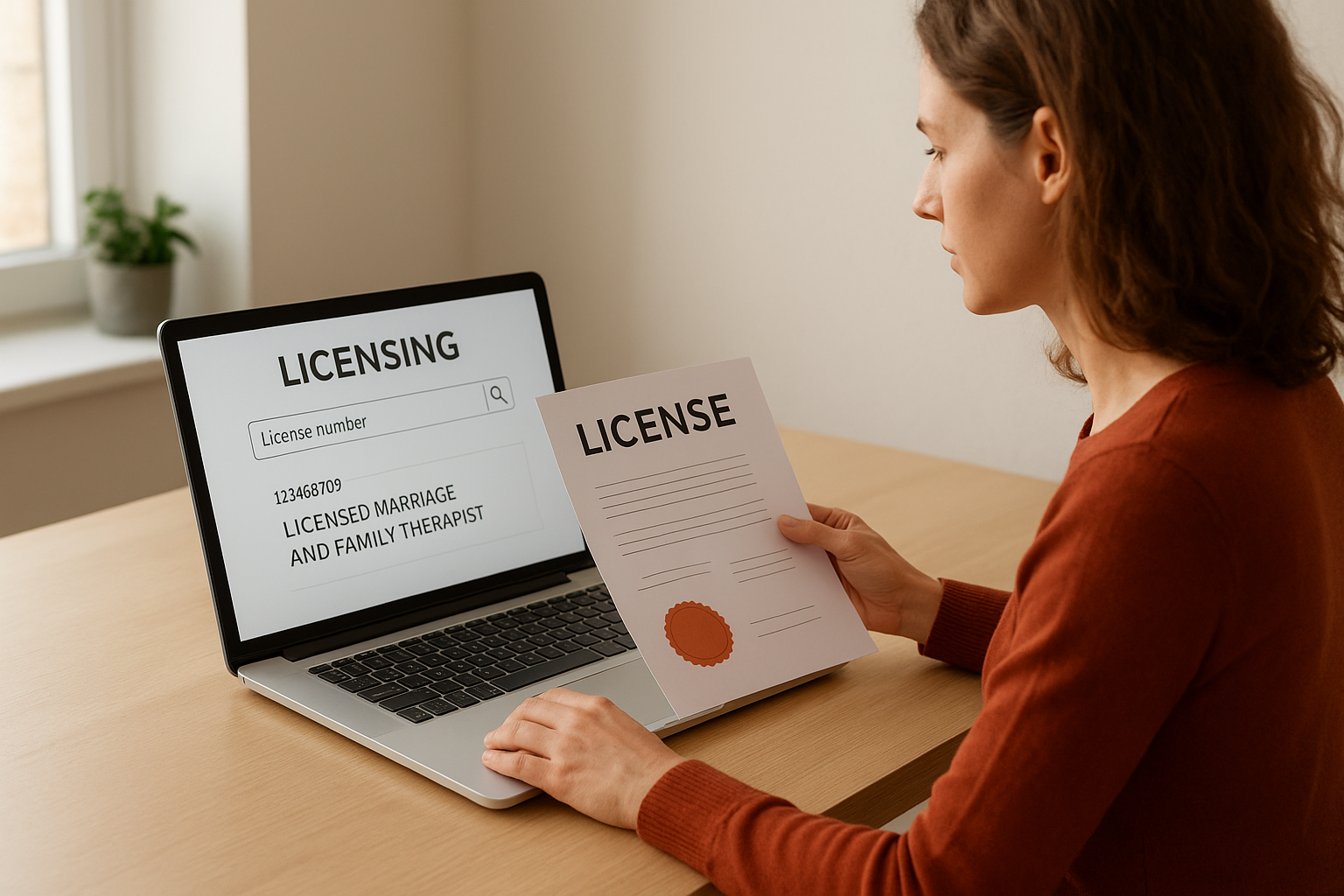
Confirm how many years they've worked specifically with couples, not just general therapy experience. A therapist with ten years in practice but only two years doing couples work is less prepared than someone with five years focused exclusively on relationship therapy. Check whether they've completed advanced training in recognized couples therapy methods like Gottman, EFT, or Imago, which signals they've invested in structured frameworks beyond basic graduate school coursework.
"License verification takes three minutes and tells you whether you're dealing with a qualified professional or someone who bought a certificate online."
Evaluate cultural and personal fit
Schedule free consultation calls with your top three candidates and ask direct questions about their approach to relationships that match yours. If you're in an interfaith marriage, ask how they handle religious differences; if you're LGBTQ+, ask about their experience with non-heteronormative relationships; if one partner comes from a different cultural background, confirm they understand how culture shapes communication styles. Generic "I work with everyone" answers are red flags; you want specifics about how they've navigated situations similar to yours.
Pay attention to how they interact during the call. Do they interrupt you? Do they ask clarifying questions or make assumptions? Trust your gut if something feels dismissive, judgmental, or performative, because that dynamic won't improve once you're paying for sessions. You're not looking for someone who agrees with everything you say, but you need someone who respects both partners equally and doesn't take sides.
Step 4. Compare methods and session structure
Different therapists use different frameworks, and the method they follow shapes everything from how sessions feel to how quickly you'll see progress. You need to understand what happens during a typical session and how their approach addresses your specific issues, not just accept "we'll work on communication" as an explanation. Some therapists blend multiple methods, while others stick rigidly to one framework. Both can work, but you deserve to know what you're signing up for before you spend hundreds of dollars testing it out.
Understand the core therapeutic methods
Ask each therapist which evidence-based method guides their couples work and how it applies to your situation. Emotionally Focused Therapy (EFT) focuses on attachment bonds and helps you identify the emotional patterns beneath your conflicts, making it effective for couples where one partner withdraws and the other pursues. The Gottman Method emphasizes building friendship, managing conflict constructively, and creating shared meaning through specific exercises you practice at home. Imago Relationship Therapy examines how childhood experiences shape partner selection and current relationship dynamics, which works well when unresolved trauma affects intimacy.
Different methods suit different problems. If you're dealing with trust issues after infidelity, you want someone trained in affair recovery protocols, not generic relationship counseling. If communication breakdowns escalate into shouting matches, look for therapists who teach de-escalation techniques and emotional regulation as part of their approach. When you refine your search for couples therapy near you, filter specifically for therapists who list the method that matches your primary concern.
"The right method addresses your specific pattern, not just relationship issues in general."
Evaluate session format and frequency
Clarify how sessions run and what happens between appointments. Most couples therapists schedule 50 to 90-minute sessions weekly or biweekly, with the first session often lasting longer for intake and assessment. Some alternate between couple sessions and individual check-ins with each partner separately, while others refuse to meet individually to maintain neutrality. Ask whether they assign homework between sessions, because structured exercises accelerate progress compared to only talking during appointments.
Find out their policy on crisis support. Do they offer emergency sessions if conflicts escalate? Can you email questions between appointments, or are you completely on your own until the next scheduled meeting? Some therapists provide brief phone check-ins as part of their service, while others maintain strict boundaries. Match their availability to your needs, especially if you're in a high-conflict phase where weekly sessions might not be enough.
Step 5. Ask screening questions and book
You've verified credentials and understand their methods, but now you need to ask the questions that reveal whether this therapist can actually handle your specific situation. Most couples waste their first paid session covering information they could have gathered during a free consultation, so handle the screening now before you commit. Prepare a short list of direct questions that address your primary concerns, and don't accept vague answers that sound reassuring but say nothing concrete. This conversation determines whether you book immediately or keep searching.
Critical questions to ask every therapist
Ask these specific questions during your consultation call and pay attention to how confidently they respond. Hesitation or deflection signals they haven't worked with your situation enough to know what actually helps.
- "How many couples dealing with [your specific issue] have you worked with in the past year?"
- "What does your typical treatment timeline look like for couples in our situation?"
- "How do you handle sessions when one partner is significantly more resistant than the other?"
- "What happens if we hit a point where we're not making progress after several sessions?"
- "Do you take sides when you believe one partner's behavior is clearly harmful?"
- "What's your policy if we decide to separate during therapy, do you continue working with us or refer out?"
Request specifics about their availability and session logistics: "What's your current wait time for new couples? How do you handle rescheduling? What's your cancellation policy?" If they're booking three weeks out and your relationship is in crisis, you need to know that now, not after you've decided they're your top choice.
"The right therapist answers tough questions directly without defensive explanations or therapeutic jargon."
Book your first session immediately
Once you find a therapist who answers your questions clearly and feels like the right fit, schedule your first appointment before you end the call. Waiting "to think about it" or "discuss it with your partner" creates space for doubt and procrastination to kill your momentum. Your search for couples therapy near you ends the moment you have a confirmed appointment on your calendar, not when you've found someone you might call later.
Confirm the session fee, payment methods, and whether they require both partners at every session. Get the intake paperwork started immediately if they send forms beforehand, since completing those documents together often surfaces useful conversations before you even walk into the first session. Block the time on both calendars now and treat it as non-negotiable.
Step 6. Set expectations for the first month
Your first month of couples therapy sets the foundation for everything that follows, and you need realistic expectations about what will happen during those initial sessions. Most couples expect immediate breakthroughs or dramatic shifts in their partner's behavior, then feel discouraged when the first few weeks feel slow or uncomfortable. The reality is that early sessions focus heavily on assessment, building rapport with your therapist, and establishing a framework for the work ahead. Progress happens gradually through consistent application of what you learn, not through magical realizations during a single conversation.
What happens in the first three sessions
Your therapist will spend the first session gathering information about your relationship history, current conflicts, and what brought you to therapy now. Expect to answer questions about how you met, what your relationship was like before problems started, and what patterns you've noticed repeating over time. This intake session often feels more like an interview than therapy, which catches couples off guard when they arrive ready to solve problems immediately.

Sessions two and three typically involve identifying your specific conflict cycle and teaching you initial tools to interrupt it. Your therapist might ask you to demonstrate how a typical argument unfolds, then point out the moment where things escalate and what each partner does that keeps the pattern going. You'll practice new responses in the session, which feels awkward at first because you're learning skills while your therapist watches and corrects you.
"The first month teaches you the language and framework you'll use for all future sessions, so it feels foundational rather than transformative."
Track progress without obsessing over it
Decide together how you'll measure whether therapy is working, and check in weekly after each session to discuss what felt useful and what didn't. Avoid the trap of expecting your relationship to improve linearly; some weeks feel like backsliding even when you're doing the work correctly. Notice whether you're catching conflict patterns earlier, communicating needs more clearly, or recovering from arguments faster, even if arguments still happen.
If you've completed four sessions without any noticeable shift in how you interact, schedule a check-in with your therapist to discuss whether their approach matches your needs. When you searched couples therapy near you and chose this professional, you were taking a calculated risk based on limited information. Not every therapist works for every couple, and recognizing a mismatch early saves you time and money. Ask directly: "What should we be seeing by now, and what concerns you about our progress?"
When to reassess your therapist choice
Plan a formal evaluation after your first month to decide whether to continue. Look for signs your therapist understands your dynamic, addresses both partners fairly, and provides concrete tools rather than just listening and nodding. Red flags include sessions that feel aimless, a therapist who consistently takes one partner's side, or homework assignments that sit untouched because they don't connect to your actual problems.
Trust your instincts if something feels off. Switching therapists after a month isn't failure; it's smart filtering that gets you closer to the right fit. Schedule consultations with your backup options from Step 2 so you don't start your search from scratch if you decide to move on.
Next steps
Your search for couples therapy near you ends when you take action on what you've learned here. Schedule consultation calls with your shortlist, ask the screening questions from Step 5, and book your first session with the therapist who demonstrates clear expertise in your specific situation. Don't wait until your relationship hits another crisis point or until you've exhausted every other option.
Start applying what you've learned before your first session arrives. Identify the conflict pattern you want to address most urgently and notice when it shows up this week. Track what triggers it, how each of you responds, and where the cycle typically ends. This self-awareness gives your therapist concrete material to work with from day one.
If you need a therapist who prioritizes privacy, understands relationship dynamics at a clinical level, and works with couples ready to do real work, schedule a consultation with Luxury Perspectives to discuss whether our approach matches your needs.