
What Are Attachment Styles? Types, Origins, And Impact
The way you respond to intimacy, handle conflict, and seek closeness traces back to patterns you didn't consciously choose. These emotional templates, formed in your earliest relationships, continue shaping how you connect with partners, friends, and colleagues well into adulthood. What are attachment styles? They're the psychological frameworks that explain why you respond to love, closeness, and vulnerability the way you do.
At Luxury Perspectives, Rhonda Baker works with clients who sense something deeper is driving their relational patterns. Attachment theory offers a lens for understanding why certain connections feel natural while others trigger anxiety, withdrawal, or repeated conflict. Recognizing your attachment style transforms vague frustration into actionable self-awareness, the kind that actually shifts how you show up in relationships.
This article examines the four primary attachment styles, explores how they form during childhood, and unpacks their influence on adult intimacy. Whether you're navigating modern dating, addressing recurring relationship challenges, or building stronger communication with a partner, this knowledge provides a foundation for meaningful change.
Why attachment styles matter in adult relationships
Your attachment style doesn't just influence who you're drawn to. It shapes how you interpret a partner's behavior, what triggers your defenses, and whether you pursue connection or create distance when stress enters the relationship. Most people attribute relational friction to personality clashes or bad timing, but attachment patterns explain why the same conflicts resurface across different partners and contexts. Understanding what are attachment styles allows you to distinguish between genuine incompatibility and the predictable ways unexamined patterns sabotage intimacy.
What attachment patterns predict about your relationships
Attachment styles function as behavioral blueprints that dictate your expectations around closeness and reliability. If you developed secure attachment, you likely approach relationships with a baseline trust that others will respond to your needs without abandoning or engulfing you. Your conflicts resolve faster because you don't interpret disagreements as threats to the relationship itself. You express needs directly rather than through withdrawal or escalation.
Insecure attachment styles, by contrast, create predictable relational friction. Anxious attachment drives you to seek constant reassurance, which partners often experience as overwhelming or distrustful. Avoidant attachment keeps you emotionally distant, framing vulnerability as weakness and independence as strength. Disorganized attachment produces contradictory behaviors that confuse both you and your partner, cycling between desperate closeness and abrupt rejection. These patterns don't reflect moral failures. They're adaptive strategies that once kept you safe but now limit your capacity for adult intimacy.
Recognizing your attachment style transforms reactive patterns into conscious choices.
How attachment styles influence communication and conflict
Communication breakdowns rarely stem from poor word choice. They emerge when attachment-driven anxieties hijack your ability to hear what's actually being said. If you carry anxious attachment, a delayed text response triggers abandonment fears, leading you to send multiple follow-up messages before your partner even checks their phone. You interpret neutral behavior through a lens of rejection, creating conflict where none existed. Your partner's need for space reads as withdrawal, so you pursue harder, which only intensifies their need for distance.
Avoidant attachment produces the opposite problem. You shut down during emotional conversations, viewing your partner's need for connection as invasive rather than reasonable. Conflict resolution requires vulnerability, but your nervous system interprets vulnerability as danger. You intellectualize feelings, change the subject, or physically leave the room when conversations intensify. Partners feel unheard, not because you lack intelligence or care, but because your attachment style prioritizes self-protection over connection.
The cost of unrecognized attachment patterns
Operating without awareness of your attachment style guarantees repeated relational outcomes you don't want. You find yourself attracted to emotionally unavailable people, then blame bad luck rather than recognizing the pattern your nervous system seeks. Secure partners feel boring because your attachment system equates intensity with love. You mistake anxiety for chemistry and stability for lack of passion.
Unexamined attachment patterns also prevent you from accessing the full benefits of therapy or coaching. You might intellectually understand healthy relationship principles but find yourself unable to implement them when triggered. Insight without attachment awareness produces minimal change because you're addressing surface behaviors while the underlying nervous system responses remain untouched. Clients at Luxury Perspectives often arrive after years of self-help efforts that didn't translate into lasting shifts. Attachment work provides the missing framework that makes other interventions finally stick. Your relational challenges stop feeling like character defects and become recognizable patterns you can deliberately reshape.
How attachment styles form in early childhood
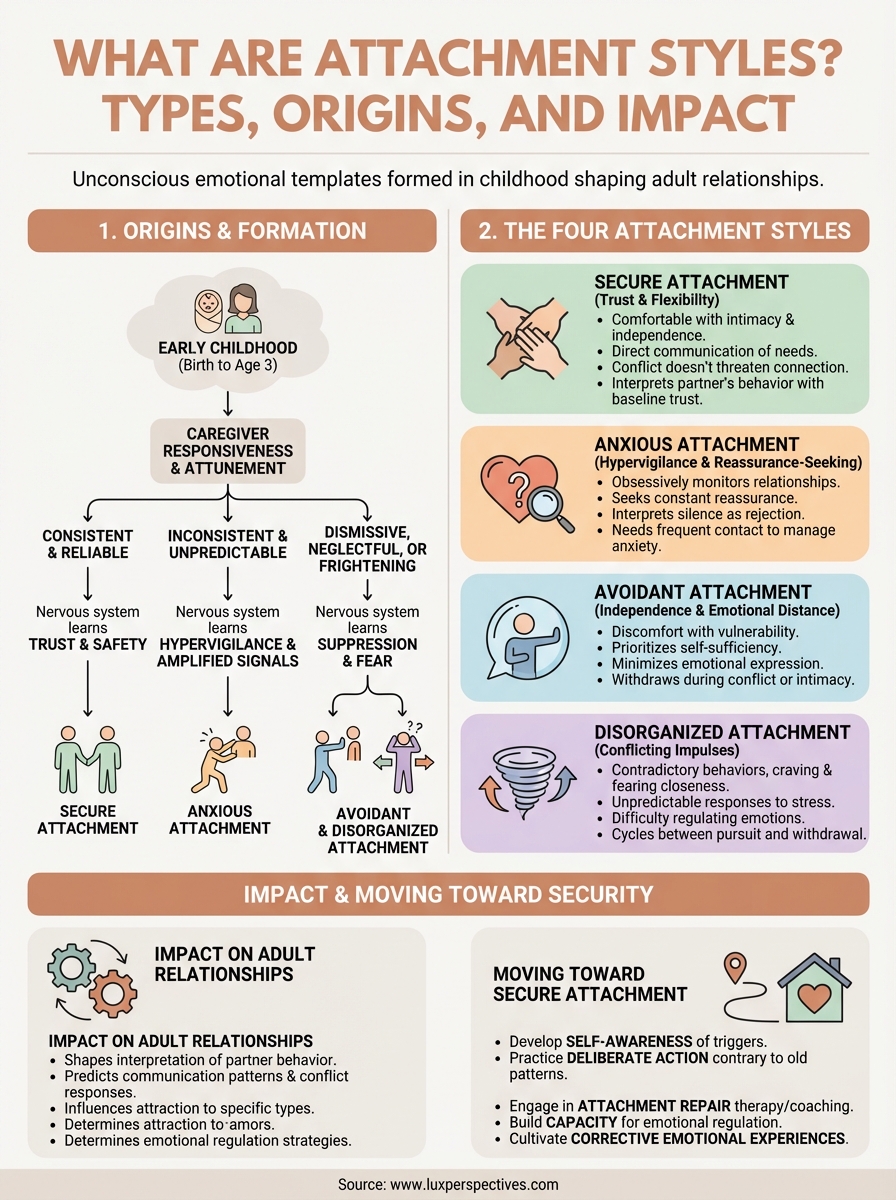
Understanding what are attachment styles requires examining the formative years when your nervous system learned whether the world responds to your needs. Between birth and age three, your brain developed implicit models of relationships based on how consistently caregivers met your emotional and physical needs. You didn't form these patterns through conscious thought. Your developing nervous system tracked whether crying brought comfort or abandonment, whether distress triggered soothing or irritation, whether your presence delighted or burdened the adults around you.

The caregiver-infant relationship as a blueprint
Your primary caregiver's emotional availability shaped your expectations about intimacy for decades to come. Infants require more than food and shelter. They need responsive attunement, the ability to sense another person tracking their emotional state and adjusting accordingly. When caregivers consistently read your signals and respond appropriately, you internalize a belief that your needs matter and relationships provide safety. When caregivers miss your cues, respond inconsistently, or prioritize their emotional state over yours, you develop protective strategies that persist into adulthood.
Your earliest relationships taught your nervous system whether connection brings safety or threat.
What consistent responsiveness creates
Secure attachment forms when caregivers reliably meet your needs without overwhelming or neglecting you. These caregivers didn't need to be perfect. They provided good enough care, responding to distress most of the time and repairing ruptures when they occurred. You learned that temporary disconnection doesn't mean permanent abandonment. Emotional expression brought connection rather than punishment, so you didn't develop elaborate defenses against vulnerability. Your nervous system encoded the experience that other people can be trusted, your needs deserve attention, and relationships ultimately provide more comfort than danger.
When needs go unmet or receive unpredictable responses
Insecure attachment patterns emerge when caregivers consistently fail to provide attuned responsiveness. Anxious attachment develops when caregivers respond unpredictably, sometimes available and sometimes absent without clear patterns you could anticipate. Your nervous system learned to amplify distress signals because inconsistent responses taught you that only extreme displays of need guarantee attention. Avoidant attachment forms when caregivers routinely dismiss emotional needs or punish displays of vulnerability. You learned to suppress your needs because expressing them brought rejection rather than comfort. Disorganized attachment occurs when caregivers themselves become sources of fear, creating the impossible bind of needing comfort from the person who causes distress.
The four attachment styles and what they mean
Attachment theory identifies four distinct patterns that describe how you approach relationships and manage emotional intimacy. These categories aren't personality types or fixed diagnoses. They represent observable behavioral patterns rooted in your early experiences with caregivers. When you ask what are attachment styles, you're examining the framework your nervous system developed for navigating closeness, managing fear, and responding to emotional needs in yourself and others.
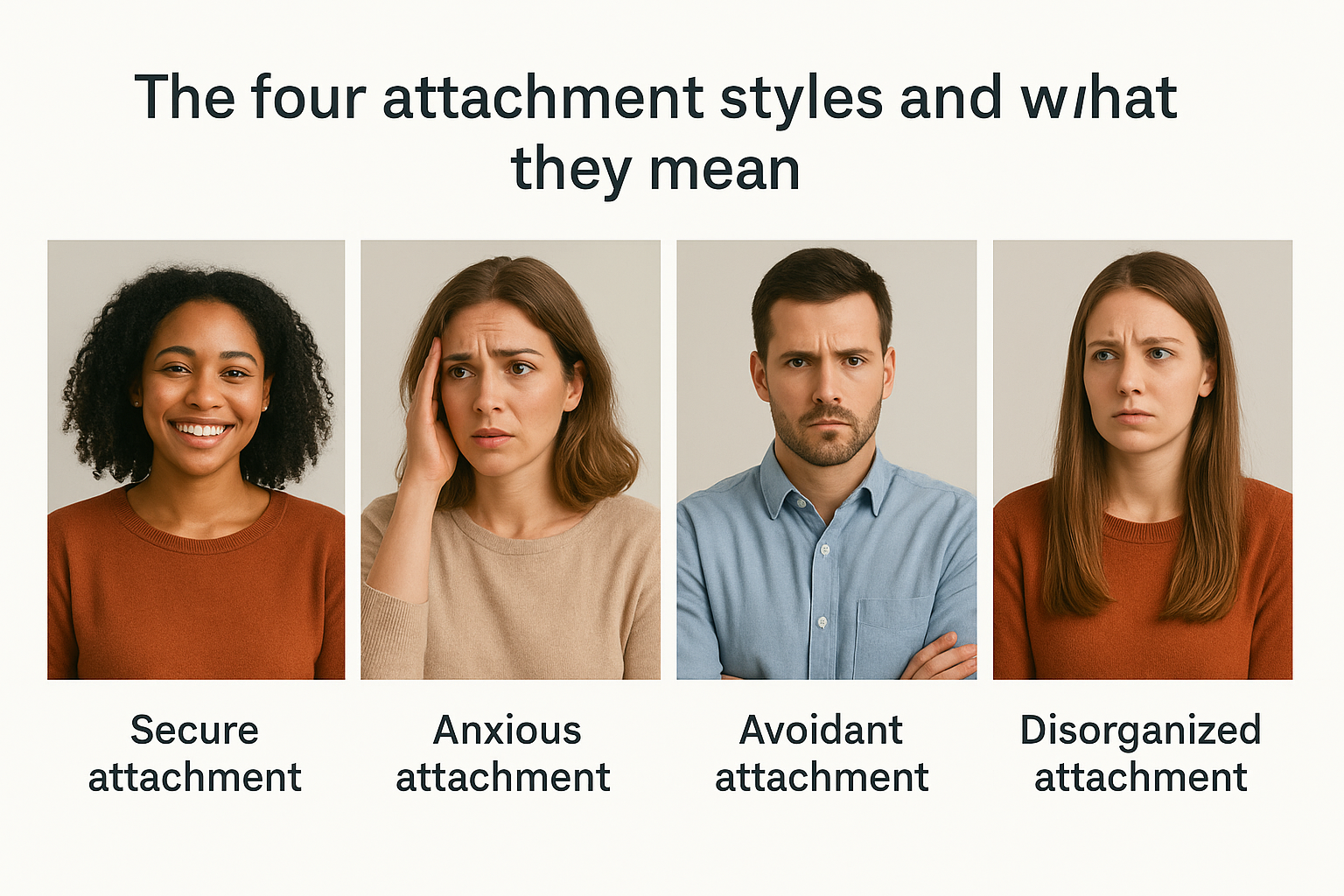
Secure attachment: trust and flexibility
Secure attachment reflects your ability to balance independence with intimacy without viewing either as threatening. You feel comfortable expressing needs directly, trusting that vulnerability strengthens rather than endangers relationships. Conflict doesn't trigger catastrophic thinking because you maintain a baseline confidence that disagreements can be resolved without destroying the connection. You move toward your partner during stress rather than withdrawing or becoming overwhelmed. Your nervous system interprets closeness as safe, allowing you to regulate emotions without needing constant reassurance or complete self-reliance.
Anxious attachment: hypervigilance and reassurance-seeking
Anxious attachment drives you to monitor relationships obsessively for signs of withdrawal or abandonment. You interpret ambiguous behavior as rejection, leading to preemptive protests that often push partners away. Your nervous system equates distance with danger, so you pursue closeness with intensity that others experience as controlling or insecure. Small changes in communication patterns trigger disproportionate anxiety. You struggle to self-soothe, requiring external validation to manage emotional states that secure individuals regulate internally.
Your attachment style determines whether you interpret silence as peace or abandonment.
Avoidant attachment: independence and emotional distance
Avoidant attachment manifests as discomfort with vulnerability and a preference for self-sufficiency over interdependence. You minimize emotional expression, viewing needs as burdensome and intimacy as invasive. Partners describe you as emotionally unavailable, not because you lack feelings but because your nervous system treats emotional exposure as dangerous. You prioritize autonomy, often choosing independence when secure attachment would seek connection. Relationship conflicts trigger withdrawal rather than engagement, leaving partners feeling shut out when they need you most.
Disorganized attachment: conflicting impulses
Disorganized attachment produces contradictory behaviors that confuse both you and your partners. You simultaneously crave and fear intimacy, moving toward connection then abruptly retreating when vulnerability increases. This pattern emerges when early caregivers were both sources of comfort and fear, creating nervous system confusion about whether relationships provide safety or danger. You lack consistent strategies for managing emotional distress, alternating between anxious pursuit and avoidant withdrawal without predictable patterns your partner can understand or accommodate.
How each attachment style shows up in adulthood
The patterns you developed in childhood don't vanish when you reach adulthood. They translate into predictable behaviors across your romantic relationships, friendships, workplace interactions, and even how you parent your own children. Understanding what are attachment styles means recognizing these manifestations in your daily life, from how you handle a partner's business trip to how you respond when a colleague needs emotional support.
Secure attachment in daily life
Your secure attachment allows you to maintain emotional equilibrium during relationship stress without catastrophizing or withdrawing. When your partner needs space, you respect that boundary without interpreting it as rejection. You initiate difficult conversations directly rather than through passive communication or avoidance. Conflict resolution happens efficiently because you trust the relationship can withstand disagreement. You pursue personal interests without fearing abandonment, and you welcome your partner's independent pursuits without feeling threatened. Friends describe you as reliable and emotionally present, capable of both giving and receiving support without keeping score.
Anxious attachment behaviors in adults
Anxious attachment manifests as constant relationship monitoring that exhausts both you and your partners. You check your phone obsessively, analyze text response times, and interpret delayed replies as evidence of waning interest. Small changes in your partner's behavior trigger disproportionate emotional responses. You need frequent verbal reassurance, asking "Do you still love me?" even when nothing suggests otherwise. Your relationships feel consuming because your nervous system treats separation as dangerous, making independent time feel unbearable rather than refreshing.
Attachment patterns determine whether you experience a partner's independence as healthy or threatening.
Avoidant attachment in professional and personal contexts
Avoidant attachment keeps you emotionally self-sufficient to a fault. You deflect conversations that require emotional vulnerability, redirecting toward intellectual topics or practical solutions. Partners complain you seem distant or uninterested, not recognizing that your withdrawal protects you from the discomfort intimacy triggers. You maintain strict boundaries around personal time, viewing requests for emotional support as intrusive. At work, you excel at independent projects but struggle with collaborative efforts that require emotional transparency. You ghost relationships rather than having direct conversations about incompatibility.
Disorganized attachment patterns across settings
Disorganized attachment produces chaotic relationship dynamics that confuse everyone involved. You pursue intense closeness then abruptly create distance when vulnerability becomes overwhelming. Your behavior lacks consistency, making it impossible for partners to predict whether you'll seek connection or push them away. Conflict triggers extreme responses, from complete emotional shutdown to explosive reactivity. You struggle to maintain stable friendships because your unpredictable availability strains others' patience. Your internal experience feels equally contradictory, wanting intimacy while simultaneously fearing it.
How to identify your attachment style in real life
Your attachment style reveals itself through consistent patterns rather than isolated incidents. Recognition requires observing your automatic responses across multiple relationships and contexts. The way you react when a partner needs space, how you handle delayed text responses, and what triggers your defensive strategies all provide diagnostic clues about your underlying attachment organization. Examining what are attachment styles in your own behavior means tracking your nervous system's default settings when intimacy, conflict, or separation enters the picture.

Notice your automatic responses to closeness
Your initial reaction when someone wants deeper connection exposes your attachment baseline. Secure attachment makes you receptive to intimacy without needing to control its pace or retreat from vulnerability. You feel comfortable matching another person's emotional availability without anxiety or guardedness. Anxious attachment creates urgency around closeness, driving you to accelerate intimacy faster than relationships naturally develop. You interpret gradual connection-building as rejection rather than healthy pacing. Avoidant attachment triggers discomfort when vulnerability increases, leading you to create distance through work demands, suddenly remembering other priorities, or intellectualizing feelings instead of experiencing them.
Your body's reaction to emotional exposure tells you more than your conscious explanations.
Track your emotional patterns during conflict
Disagreements activate your attachment system's core programming. Secure attachment allows you to stay engaged during difficult conversations without shutting down or escalating. You express needs directly and trust that working through conflict strengthens rather than threatens the relationship. Anxious attachment makes you pursue resolution desperately, unable to tolerate the discomfort of unresolved tension. You apologize excessively, even when not at fault, prioritizing peace over addressing legitimate concerns. Avoidant attachment drives you to withdraw when emotions intensify. You stonewall, change the subject, or physically leave conversations that require emotional engagement.
Observe your needs around communication frequency
Your baseline comfort with contact intervals reveals attachment tendencies. Secure attachment lets you maintain connection across physical distance without constant communication. You trust the relationship persists whether you text daily or weekly. Anxious attachment requires frequent contact to manage anxiety. Silence feels threatening, so you initiate communication repeatedly, interpreting your partner's slower response style as waning interest rather than different preferences. Avoidant attachment makes you view regular communication as suffocating. You need significant independent time to feel regulated, experiencing frequent check-ins as intrusive rather than caring.
How to move toward secure attachment over time
Shifting your attachment style requires more than intellectual understanding of patterns. You need consistent practice that reconditions your nervous system's automatic responses to intimacy, conflict, and vulnerability. The process takes time because you're not just learning new behaviors. You're teaching your body that the defensive strategies you developed in childhood no longer serve your adult relationships. Understanding what are attachment styles provides the framework, but deliberate action creates the change.
Work with someone who understands attachment repair
Attempting to shift attachment patterns without professional guidance often reinforces existing defenses rather than dismantling them. A therapist trained in attachment theory helps you identify triggers before your nervous system hijacks your responses. They create a corrective emotional experience where you practice vulnerability with someone who responds consistently and appropriately, something your early caregivers couldn't provide. This therapeutic relationship becomes the template your nervous system uses to recalibrate expectations about intimacy and trust.
Professional support provides the consistent responsiveness your nervous system needs to update its relational blueprints.
Practice secure behaviors even when they feel unnatural
Your nervous system changes through repeated experiences that contradict old patterns. If anxious attachment drives you to pursue reassurance, practice tolerating the discomfort of waiting before reaching out. Notice the anxiety without acting on it immediately. Avoidant individuals need to practice emotional expression in small doses, sharing feelings before your defenses activate. Start with low-stakes situations where vulnerability feels manageable, then gradually increase exposure as your tolerance builds.
Build capacity for emotional regulation
Secure attachment requires managing your emotional state without depending entirely on others or suppressing feelings completely. Develop self-soothing practices that calm your nervous system when triggered. Physical regulation techniques like controlled breathing or movement help more than cognitive strategies alone. Learning to recognize your body's stress signals before they escalate gives you the chance to intervene before attachment patterns take over. Your capacity to stay present during emotional discomfort determines whether you can implement new relational strategies when they matter most.
Common misconceptions and FAQs about attachment
Most people misunderstand attachment theory as personality typing or relationship fate, missing its actual utility as a framework for understanding changeable patterns. These misconceptions prevent you from using attachment knowledge effectively. Clarity about what are attachment styles and what they're not helps you apply the framework without limiting beliefs about your relational potential or blaming childhood experiences for every adult challenge.
Can attachment styles change or are they permanent?
Your attachment style functions as a working model rather than a fixed trait. Research shows approximately 25 to 30 percent of people experience attachment style shifts during adulthood, typically through sustained corrective experiences in secure relationships or targeted therapeutic work. Change doesn't happen through insight alone. Your nervous system requires repeated exposure to relationships that contradict early expectations, gradually updating its baseline assumptions about intimacy and trust.
The question isn't whether change is possible but whether you're willing to do the uncomfortable work required. Shifting from insecure to secure attachment means practicing vulnerability when your instinct screams to withdraw or pursue. It requires staying present during conflict when every fiber of your being wants to flee or attack. Professional guidance accelerates this process because therapists trained in attachment repair provide the consistent responsiveness your nervous system needs to recalibrate.
Your attachment style reflects learned patterns, not permanent limitations on your capacity for secure connection.
Do attachment styles determine relationship success?
Attachment styles predict relational patterns, not relationship outcomes. Two people with insecure attachment can build successful partnerships if both commit to recognizing their patterns and developing more secure behaviors. Similarly, having secure attachment doesn't guarantee relationship success if fundamental incompatibilities exist around values, lifestyle, or long-term goals.
What attachment styles actually determine is the quality of your relational experience rather than whether relationships last. Anxious-avoidant pairings create predictable pursuit-distance dynamics that exhaust both partners, but awareness of these patterns allows couples to interrupt cycles before they escalate. Your attachment style influences how much deliberate effort healthy connection requires, not whether you deserve or can achieve it.
Key takeaways and next steps
Understanding what are attachment styles gives you a framework for recognizing patterns that shape every intimate relationship you enter. Your attachment style formed through early experiences, but it operates as a working model rather than permanent programming. Secure attachment creates trust and emotional flexibility, while anxious, avoidant, and disorganized patterns produce predictable relational challenges that repeat until you address their underlying mechanics.
Recognition alone doesn't create change. Sustained shifts require deliberate practice with professional guidance that helps you interrupt automatic responses before they sabotage connection. You need consistent experiences that contradict old expectations, teaching your nervous system that vulnerability can be safe and closeness doesn't require hypervigilance or complete self-reliance. Small adjustments in how you respond to conflict, manage emotional intensity, and communicate needs compound over time into fundamentally different relational outcomes.
Rhonda Baker at Luxury Perspectives specializes in helping clients translate attachment awareness into actionable strategies that create lasting change in how they connect, communicate, and choose partners.